Technological Deadlock: Why Russia Fails to Restart Strategic Aviation Production
Russia's military-industrial complex is struggling to produce new strategic bombers due to lost Soviet-era technologies and the impact of international sanctions.
 🚨Events
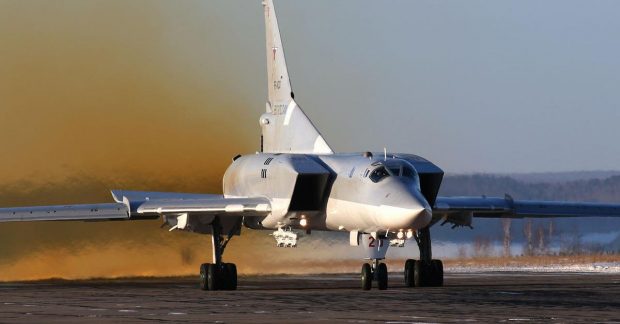
Photo: UNIAN
Key points
- Russia is unable to restart serial production of engines for strategic bombers.
- New aircraft projects like the A-100 are stalled due to a shortage of Western microelectronics.
- Damage to the Taganrog facility and Operation 'Web' have disrupted aviation repair logistics.
The Russian Federation is increasingly grappling with insurmountable obstacles in its attempts to resume full-scale production of strategic aviation. According to military expert Anatoliy Khrapchynskyi, Moscow is forced to rely almost exclusively on Soviet-era legacies, as the modern industrial base is incapable of recreating the complex technological cycles of the previous century. This creates critical risks for the future of the Russian bomber fleet, which serves as the primary carrier of long-range missile weaponry.
Lost Technologies and Engine Shortages
One of the most acute problems remains the production of aircraft engines. Strategic missile carriers like the Tu-95MS and supersonic Tu-22M3 require specific power plants, such as the NK-12MP and NK-25. According to Khrapchynskyi, Russia has lost the unique metallurgical base and machine tool park that were part of the pan-imperial cooperation. Currently, the aggressor's "strategic greatness" relies on so-called "cannibalization"—dismantling old airframes to maintain the viability of those still flying.
"Moscow's problem is that between the propaganda cartoon about 'restoring the series' and the actual factory floor lies a chasm of lost Soviet technological cycles," notes Anatoliy Khrapchynskyi.
The situation with Tu-160M aircraft in Kazan is particularly telling. While official sources claim a resumption of production, in reality, it involves completing old Soviet-era airframe backlogs. Building new airframes from scratch, specifically welding titanium beams in vacuum chambers, remains an unattainable level for modern Russian industry. Every combat sortie with a heavy missile payload burns through the aircraft's lifespan significantly faster than peacetime regulations allow.
Crisis in Reconnaissance Aviation and Logistics
The state of long-range radar detection aircraft is equally dire. The A-100 "Premier" project has effectively stalled due to sanctions on Western microelectronics. Attempts to replace military-grade chips with civilian counterparts from "gray imports" have failed for such high-tech equipment. This leads to a gradual degradation of the enemy's radar field, which is critical for coordinating aerial attacks.
The situation is further exacerbated by strikes on infrastructure, specifically the Taganrog Aviation Scientific and Technical Complex. Combined with Operation "Web," this has severed the logistical chains for fleet restoration. Thus, the mathematics of war points to a gradual exhaustion of Russia's aviation resources, forcing the enemy to preserve each remaining aircraft more carefully.
Source UNIAN — unian.ua/weapons/rosiya-maye-obmezheni-mozhlivosti-vidnovlyuvati-st… ↗
Read next
 💼Economy
Financial market at the beginning of the week: currency fluctuations recorded in Ukraine
At the beginning of the week, Ukrainian banks and exchange offices showed a decrease in the exchange rates of leading foreign currencies. At the same time, the NBU also s…
 🛡️Security
Aftermath of the strike on Dymer: death toll rises, elderly woman rescued
In the town of Dymer, Kyiv region, rescuers continue to clear rubble following a hostile attack, with the death toll rising to nine.
 🛡️Security
Energy workers restore power in Rivne region following attack
Electricity supply has been fully restored in the Sarny district of the Rivne region after being disrupted by a Russian attack on November 20.
 🎭Culture & Sport
Autumn Rose Care: Tips for Gardeners in Izmail
Experts explain why it is best to avoid radical rose pruning until after the first hard frosts.
 🇺🇦Ukraine
Estonia supports Ukraine's right to self-defense following incident in the Gulf of Finland
Estonian Foreign Minister Margus Tsahkna stated that the strike on a Russian vessel is a consequence of Russia's war, reaffirming Ukraine's right to defend itself.
 🛡️Security
Rescue operation in Dymer: 89-year-old woman pulled from rubble of destroyed building
In the village of Dymer, Kyiv region, rescuers pulled an 89-year-old woman from the rubble following a Russian drone strike. The death toll from the attack has risen to n…